

During World War II, food shortages forced families to make creative meals using basic items to save or limit scarce goods like meat, butter, and sugar. Ration recipes in ration cookbooks and in the local newspaper. Some of these recipes and thoughts on food extenders and alternatives came out of WWI and some from the Depression.
With food rationing, newspapers offered recipes and guidance on meal planning, cooking with various rations and restrictions, and canning your own homegrown foods. In the Melrose Free Press, these generally appeared under “Molly Pitcher says” headlines, and in the Boston Globe, they were in the Household Department on the Women’s Page, home to the Confidential Chat.
With food rationing, newspapers offered recipes and guidance on meal planning, cooking with various rations and restrictions, and canning your own homegrown foods. In the Melrose Free Press, these generally appeared under “Molly Pitcher says” headlines, and in the Boston Globe, they were in the Household Department on the Women’s Page, home to the Confidential Chat.
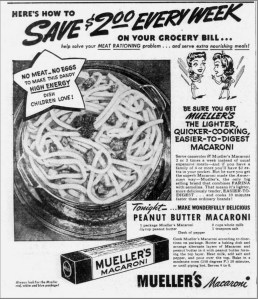
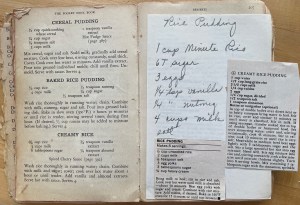
Recipes from the early days of the war, before sugar, butter, and meat rationing, seem quite reasonable. In 1942, the deprivations seemed more like the late Depression years than what was to come in 1943 and 1944. They were simple and filling, featuring dishes like rice pudding and casseroles.
In 1943 and 1944, as food resources became scarce, recipes promoted meatless meals, protein from other foods like peanut butter and soy, and food extenders such as casseroles that used more macaroni and cheese than meat. They also included recipes for items that would last or could be shipped to soldiers overseas, such as hermits and war cake. My father, uncle, and many members of my extended family seemed to have a love of hermits, an old-fashioned New England cookie where molasses can be substituted for sugar and the use of spices such as cinnamon, clove and ginger. Another family favorite was gingerbread, which also used molasses as a sugar substitute.
By 1944, items such as Kraft Macaroni and Cheese were popular and filling when nothing else was available, along with Baked Bean Casserole with tomatoes and Peanut Butter Soup, with or without tomatoes. My grandmother, living here in Melrose, was very successful in growing and canning tomatoes. So much so that my father and my grandmother had a tomato fight. Not a fight involving throwing tomatoes at one another, but one that revolved around my grandmother serving tomato sauce as tomato soup and denying it to her teenage son. No other details were ever revealed, and both sides seemed to be waiting for an apology thirty years later. Whatever really happened, I think the real story has to do with canning homegrown tomatoes for use as needed, and as the ways to use or extend tomatoes into other dishes became scarce, the tomatoes were served without embellishment. When I was a teenager, my father stopped eating tomatoes altogether, unless a slice of tomato was served on top of a hamburger.
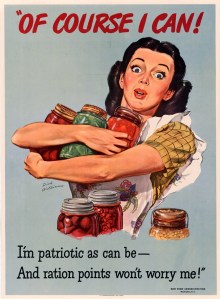
In the early days of 1943, my uncle, serving in the 10th Mountain Division, would send sugar, purchased at the Camp Hale PX, home inside the tin in which the most recent homemade goods had been sent. It wasn’t long before the PX was no longer selling sugar to recruits. Among his favorites at that time were cranberry marmalade, hermits, and brownies.
By late 1944 and early 1945, recipes that could be made without ration coupons became popular. Items such as Squash Pie and Graham Cracker Pudding were popular. The women of the First Baptist Church in Melrose would pool their resources, make large batches of items, most likely in the church kitchen, as fuel was also scarce, and divide up the food to be sent to the boys overseas.
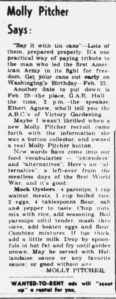
My uncle wrote home from Italy in May 1945, once the war was coming to an end and packages were being distributed to the soldiers, that some items had certainly gotten moldy, but War Cake came through just fine. He thanked each of the church women who had included what they made in the package.
While rationing has faded from memory, unless you happen to read a book that mentions it, ration recipes are still talked about. There are Reddit sites and YouTube channels devoted to ration recipes and to growing food as they did in WWII. A writer friend of mine has lovingly kept her grandmother’s well-used, much-taped 1942 “The Pocket Cook Book,” edited by Elizabeth Woody and members of the McCall’s [Magazine] Food Staff. According to her grandmother’s handwritten notes in the cookbook, favorites included rice pudding and turkey casserole.

